
Last updated November 15, 2026
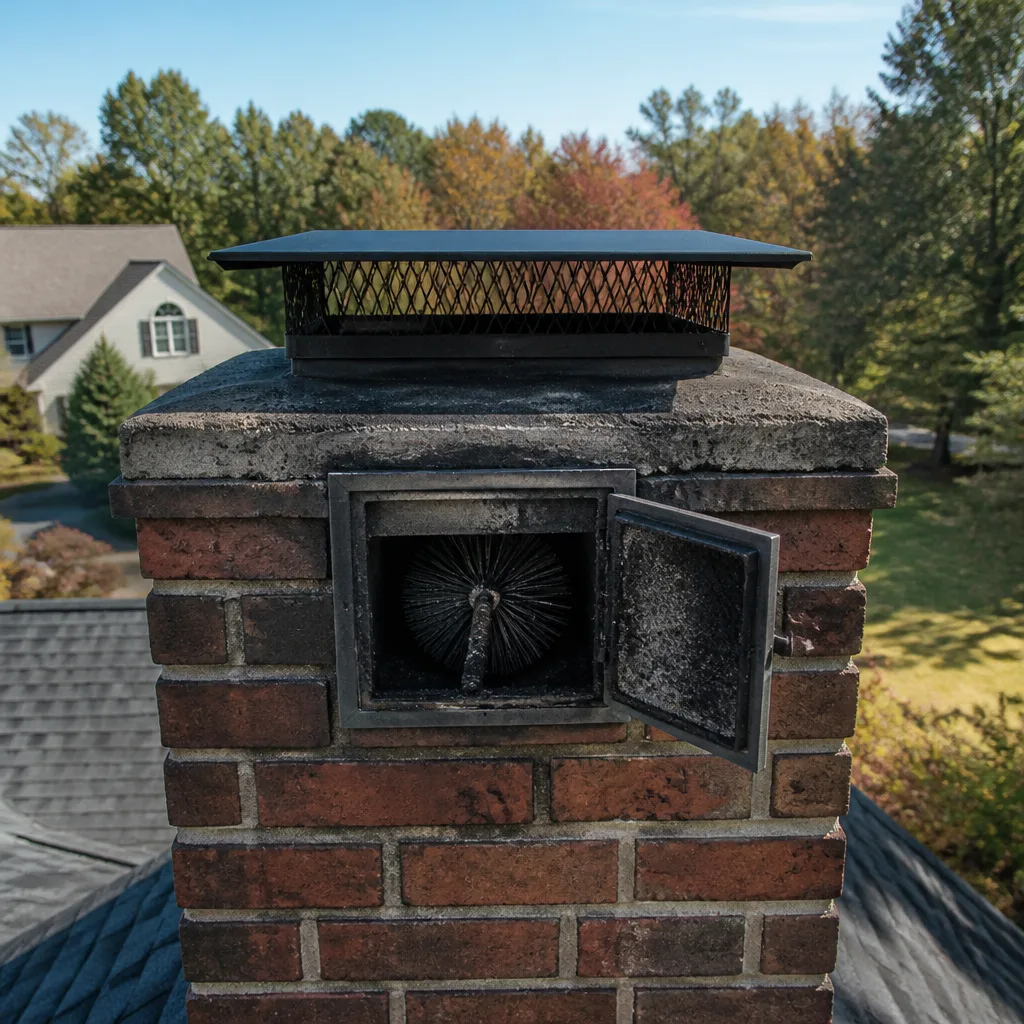 Sweep & inspection
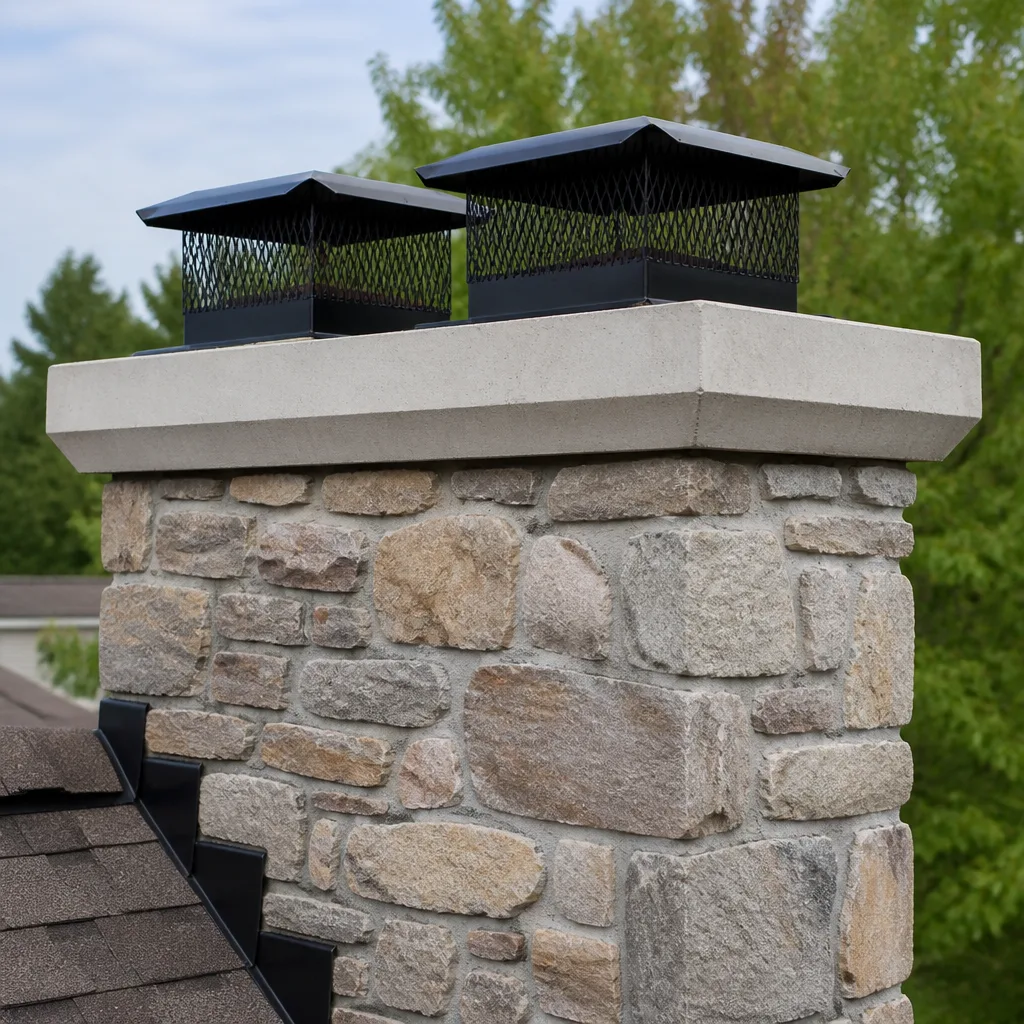 Caps & crowns
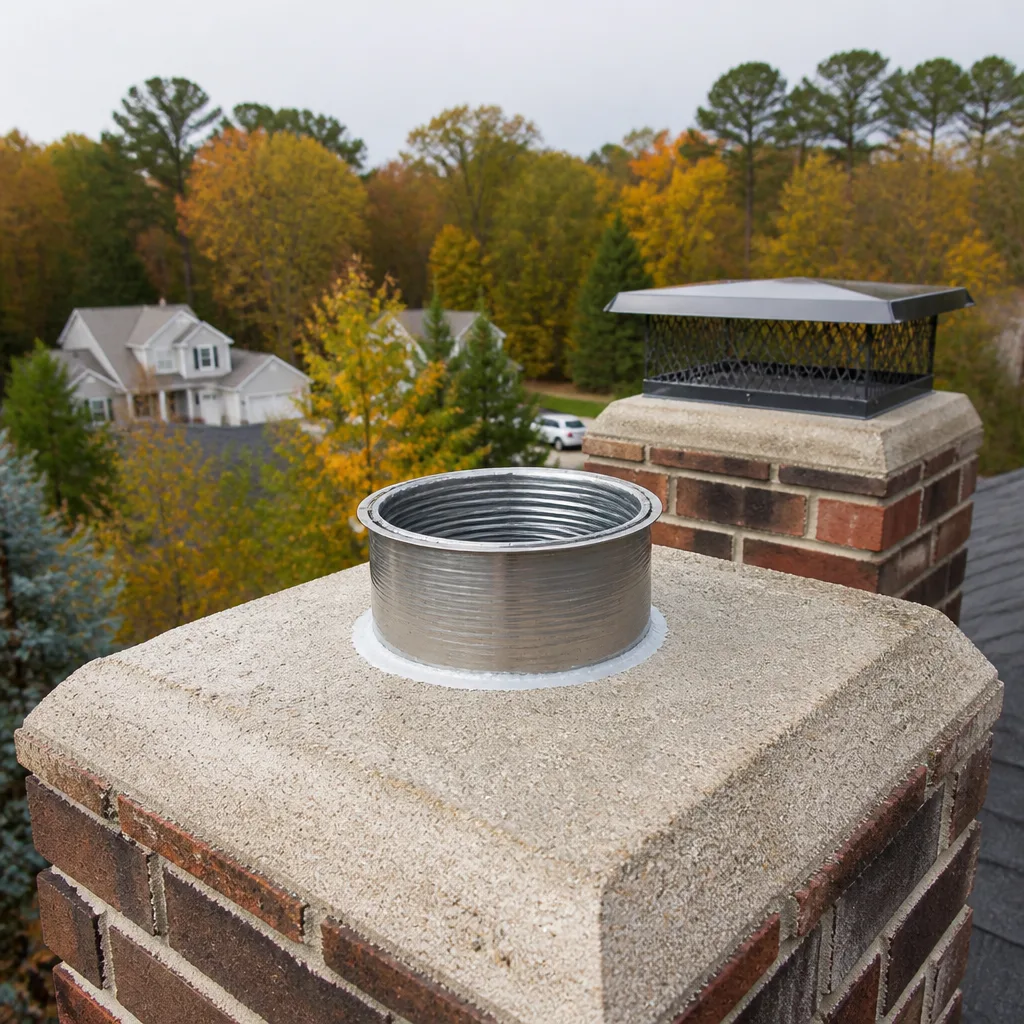 Flue relining
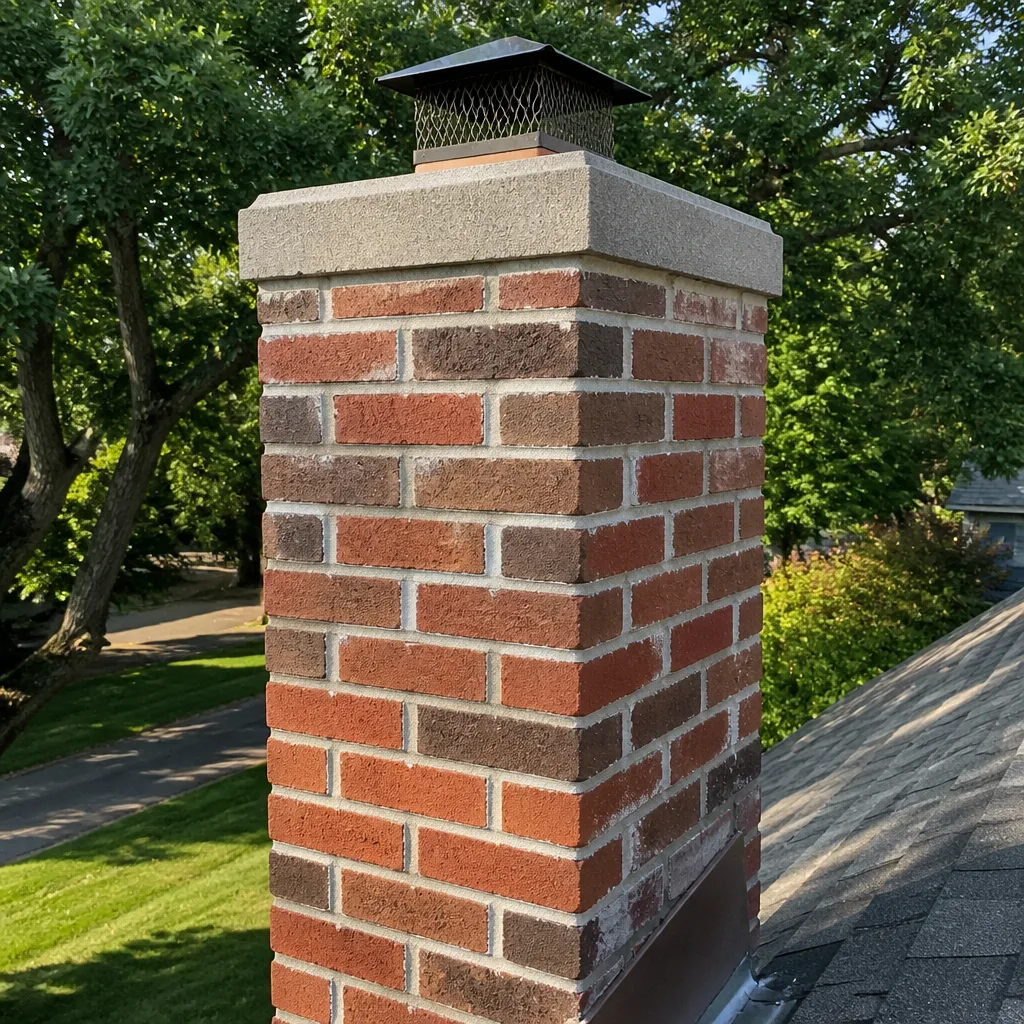 Masonry repair
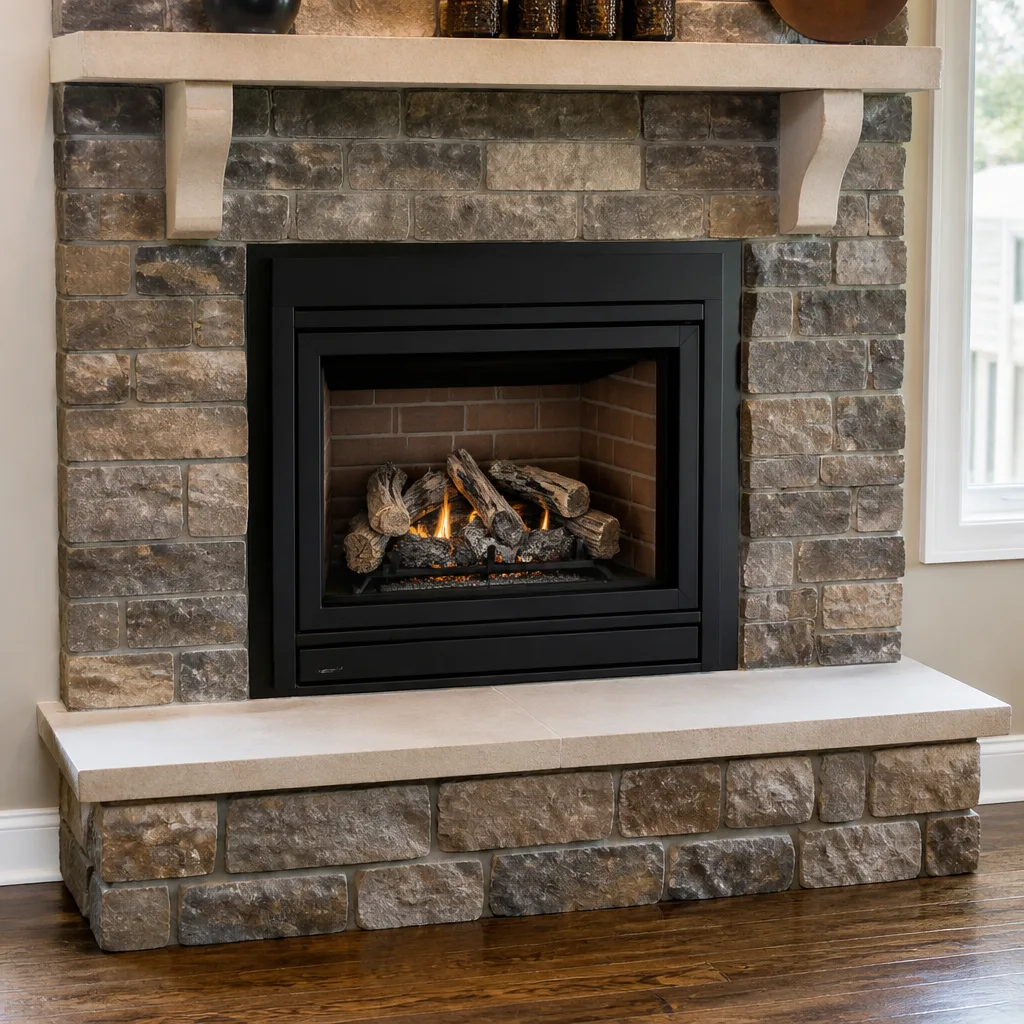 Gas fireplace service
Level 1 sweep and inspection to the NFPA 211 annual standard - flue, crown, cap, and flashing checked and photographed
Chimney sweep logs do not sweep chimneys. They loosen some creosote - which then falls where a brush and vacuum still have to collect it.
DIY vs Professional Chimney Cleaning: The Beaumont Homeowner’s Decision Guide
A chimney brush kit from a home improvement store costs about $60 and will remove loose Stage 1 creosote from an accessible straight flue. It will not remove glazed Stage 2 or Stage 3 deposits. And it cannot tell you whether your liner has a crack that’s been venting combustion gases into your wall cavity. That gap between what a brush does and what a chimney actually needs is the whole decision. This guide separates the tasks a Beaumont homeowner can legitimately handle from the ones where self-service creates risk you won’t see until something goes wrong.
Quick Answer
DIY chimney cleaning is only appropriate when your flue is straight and accessible, the buildup is light Stage 1 creosote, your liner is undamaged, and you have no history of a chimney fire. In every other case – offset flues, glazed Stage 2 or Stage 3 creosote, any visible liner damage, or a prior fire – professional cleaning and inspection is the correct call, because the risk isn’t in what you sweep out but in what you can’t see. For most Beaumont homes burning regularly, that means a professional sweep and inspection each year, with the exterior checks handled yourself.
Styles & brands we work with
- Sweep & inspection
- Caps & crowns
- Flue relining
- Masonry repair
- Gas fireplace service
Table of Contents
- What Are the Three Stages of Creosote and Why Do They Matter?
- Why Stage 1 Creosote Is the Only Condition Where a Homeowner Brush Fits
- The Chimney Conditions That Disqualify DIY Entirely
- What a Professional Rotary System Removes That a Push-Pull Brush Cannot
- The Insurance and Liability Side of Self-Certifying a Chimney
- What a Beaumont Homeowner Can Legitimately Do Themselves
- Safety First: Why the Flue Isn’t a DIY Zone
- DIY Cost vs Professional Cost in Beaumont
What Are the Three Stages of Creosote and Why Do They Matter?
Creosote forms in three distinct stages, and the stage – not the amount – determines whether a brush is the right tool. Understanding the difference is the foundation of every decision that follows.
Stage 1: Soot and Flaky Creosote
Stage 1 is the light, flaky, powdery deposit that looks like black soot or thin crust. It forms when smoke cools quickly and settles on the flue walls. It’s the earliest stage of buildup and the easiest to remove – a stiff chimney brush will knock most of it loose, and it’s the only stage where a homeowner-grade brush kit is genuinely appropriate.
Stage 2: Hard, Brittle Deposits
Stage 2 creosote is denser and darker, forming a crust that clings to the flue wall and doesn’t crumble easily. It builds when Stage 1 deposits are left in place and more smoke condenses on top of them. A push-pull brush struggles here; the crust can be too hard for bristles to break, and forcing it can damage the liner.
Stage 3: Glazed, Tar-Like Creosote
Stage 3 is the dangerous one. It’s a hard, shiny, tar-like glaze that bonds to the flue wall and requires mechanical rotary action to remove. It’s also the most combustible stage – the fuel that turns a routine fire into a chimney fire. A brush kit from a store will not touch it. This is where the tool difference stops being a matter of preference and becomes a safety issue.
In Beaumont, the fireplaces that build creosote fastest are the ones burned cool and slow – a smoldering fire, or a fire that’s damped down overnight. Those long, low-temperature burns deposit more creosote than a hot, active fire. If your fireplace is your main source of warmth on a cool evening rather than an occasional decorative flame, your flue is going to accumulate Stage 2 faster than a homeowner sweeping once a year can keep up with.
Why Stage 1 Creosote Is the Only Condition Where a Homeowner Brush Fits
A homeowner-grade brush kit is an appropriate tool in exactly one condition: light Stage 1 creosote in a straight, accessible flue. That’s not a knock on the tool. It’s a statement about what the tool is designed to do. A brush removes loose, flaky deposits from a smooth, straight surface. In every other condition, the brush is either ineffective or actively harmful.
Here’s what a homeowner brush kit can legitimately handle:
- Light soot and flaky Stage 1 deposits on a straight flue run
- Removal of loose ash and debris from the firebox floor
- Cleaning the smoke shelf and damper area when they’re easily reached from below
- Keeping a lightly used flue from accumulating small amounts of soot between professional visits
And here’s what it cannot do:
- Break through hard Stage 2 crust that has bonded to the flue wall
- Remove glazed Stage 3 deposits, which require rotary mechanical action
- Navigate an offset or angled flue without snagging or damaging the liner
- Reveal cracks, gaps, or deterioration in the liner itself
- Confirm that the flue is actually clear from top to bottom
The critical limitation isn’t effort or skill. It’s visibility. A brush removes what you can reach and leaves in place what you can’t see. The cracks, the gaps in the liner joints, and the Stage 2 deposits hiding behind a bend in an offset flue – none of those show up in a homeowner’s view from the firebox. They show up on a camera.
The Chimney Conditions That Disqualify DIY Entirely
Some chimney conditions make professional cleaning mandatory. They aren’t judgment calls, and they aren’t about comfort on a roof. If any of the following applies to your chimney, a brush kit is the wrong tool and the wrong approach:
- An offset flue. An offset flue bends or angles between the firebox and the top. A push-pull brush snags, skips the angled sections, or damages the liner when forced. A rotary system with flexible rods follows the bend.
- Stage 2 or Stage 3 creosote. Glazed or hard deposits require mechanical rotary cleaning. A homeowner brush leaves them in place entirely.
- Any visible liner damage. A cracked, spalling, or separated liner lets combustion gases and heat into the wall cavity. Cleaning around it doesn’t fix it and is dangerous to attempt.
- Any history of a chimney fire. A past fire can leave hidden damage in the flue and the surrounding framing. This requires assessment by a professional, not a brush.
- Heavy, compounded buildup. If the flue is significantly restricted by deposits, the right response is professional cleaning before anything else, not a homeowner attempt.
- Smoke or draft problems. Backdrafting, poor draft, or smoke spilling into the room points to a system problem a chimney brush won’t find.
In our experience, the conditions on this list are far more common than the homeowners who call us expect. A flue that looks clean from the firebox can hold significant Stage 2 deposits above the smoke shelf, and an offset flue hides the entire bend from view. This is why a professional chimney sweep begins with assessment rather than with a brush.
What a Professional Rotary System Removes That a Push-Pull Brush Cannot
The difference between a professional rotary cleaning system and a homeowner brush kit isn’t just skill. It’s the tool. A rotary system spins a flexible rod with a rotating cleaning head, and that spinning action is what breaks Stage 2 and Stage 3 deposits off the flue wall. A push-pull brush relies on bristles scraping a surface. Scraping works on loose soot. Spinning works on glazed tar.
Here’s what a rotary system does that a homeowner brush can’t:
- Follows offset and angled flues. Flexible rods navigate the bends that snag a rigid brush.
- Breaks hard deposits mechanically. The rotating head’s impact force shears Stage 2 crust and Stage 3 glaze off the wall instead of scraping across it.
- Cleans the full flue length consistently. The head reaches the top of the flue and the crown area, not just the sections a brush can drop straight down.
- Pairs with camera inspection. After cleaning, a camera verifies that deposits are actually gone – which is why we include a camera inspection and photo report as part of every professional sweep.
The tool choice reflects the same principle we apply to repairs: the right product for the job, not whatever’s cheapest. When a liner needs restoring rather than replacing, we use HeatShield resurfacing, a product designed specifically to restore a deteriorating flue liner without a full reline. When a reline is the correct answer, we use a DuraFlex flexible liner system, which follows older or offset flue configurations. Both are products engineered for chimney systems, not improvised with generic materials. That’s the same reason our cap and weatherproofing work uses products from Gelco and Olympia Chimney – from cap to flue, the components are built for chimney systems specifically.
The Insurance and Liability Side of Self-Certifying a Chimney
Cleaning your own chimney doesn’t just leave you with an unverified flue. It leaves you without documentation – and documentation matters when an insurance claim is on the line. If a chimney fire damages your Beaumont home and there’s no record of professional inspection or cleaning, you may face questions about maintenance the insurer can’t answer in your favor. A professional inspection that documents the flue’s condition before a loss gives you a record. A homeowner’s brush kit gives you nothing but a memory of having done it.
This isn’t a scare tactic. It’s a straightforward matter of evidence. Insurance policies commonly include maintenance requirements for wood-burning appliances, and a claim investigation can ask for proof of upkeep. A dated professional inspection report is the kind of proof a homeowner can actually produce. A self-cleaning with no record is not.
There’s also the question of what you’re certifying. When you decide your own chimney is clean, you’re asserting that nothing dangerous remains in the flue. Without a camera, you can’t honestly make that assertion. The risk isn’t that your insurer will find out you cleaned it yourself. The risk is that you don’t have any evidence the flue was ever in safe condition in the first place.
What a Beaumont Homeowner Can Legitimately Do Themselves
A homeowner’s realistic role in chimney care is observation, not cleaning. The tasks you can legitimately handle are the ones that let you spot a problem early and hand it to a professional. That’s a useful job, and it complements a professional sweep rather than replacing it.
Exterior Visual Inspection
From the ground, look at the chimney exterior for cracked mortar, loose bricks, or a leaning stack. Use binoculars rather than climbing the roof; height work on a chimney is one of the genuine fall hazards in this trade, and the view from the ground catches most visible problems.
Cap and Screen Checks
The chimney cap is the chimney’s first line of defense against rain, birds, and debris. Check that the cap is intact, the screen is unclogged, and no animals have built nests in the flue. A cap in poor condition lets water into the flue, and water is the most common cause of long-term liner deterioration in a humid Beaumont climate. If your cap needs replacing, professional-grade caps from Famco are what we install.
Damper Operation
Open and close the damper to confirm it moves freely and seals. A damper that sticks open wastes heat and lets conditioned air escape; one that’s jammed shut is a fire risk when you light the fireplace.
A Simple Self-Check Checklist
- Look for soot or smoke staining around the firebox and the chimney exterior – a sign of poor draft or leakage.
- Confirm the cap and screen from the ground, using binoculars.
- Test the damper’s full open and close range.
- Check the firebox for loose or missing brick and mortar joints.
- Note any smoky smell in the room when the fireplace is not in use.
- Call a professional if any of the above raises a flag.
What you shouldn’t do is decide that a routine self-check means the flue is safe. Observation tells you where to look next. It doesn’t tell you what’s inside the flue.
Safety First: Why the Flue Isn’t a DIY Zone
Chimney cleaning involves real hazards that a homeowner shouldn’t take on without the right equipment and training. The two that matter most are creosote ignition and carbon monoxide. Glazed Stage 3 creosote is highly combustible, and a flue that’s cleaned incompletely can hold enough of it to sustain a chimney fire. Carbon monoxide from a blocked or damaged flue is odorless and can reach dangerous levels in a home before anyone notices a problem.
We don’t recommend step-by-step DIY cleaning for either hazard, and that’s a deliberate choice. Removing a dangerous deposit or diagnosing a liner crack requires camera verification and, in many cases, rotary tools – and the wrong approach can make a marginal flue worse. The safe path is to have a professional assess the system. In Beaumont, where the cooler months still draw regular fireplace use, an annual professional sweep before burning season is the practice that keeps the risk low. The right answer to a creosote problem is professional cleaning and, if needed, a proper repair, not a homeowner attempt to solve it around the edges.
You can read more about how we handle chimney repair when the assessment turns up actual damage.
DIY Cost vs Professional Cost in Beaumont
The honest cost comparison is about more than the price of a brush kit. Here’s how the two paths typically stack up for a Beaumont household:
| Item | DIY | Professional |
|---|---|---|
| Brush kit or rotary cleaning | About $60-$100 for a basic brush kit | Included in the sweep |
| Assessment of creosote stage | Not possible without a camera | Included; camera inspection and photo report |
| Liner verification | Not possible | Camera inspection included |
| Documentation for insurance | None | Inspection record |
| Handling Stage 2 or Stage 3 creosote | Not possible with a brush | Rotary cleaning removes it |
| Repairs if damage is found | Separate contractor | Handled by the same team, using HeatShield, DuraFlex, or other professional-grade products |
The brush kit’s real cost isn’t the $60. It’s the assumption that a clean-looking flue is a safe one. A professional sweep in Beaumont covers cleaning, camera inspection, and a photo report the homeowner can see for themselves – and that’s the part a brush kit can’t deliver.
For a closer look at what we do beyond the sweep, see our guide to Beaumont chimney services and what an inspection covers.
Common Mistakes to Avoid
- Sweeping only when the firebox looks dirty. The deposits that matter are above the smoke shelf, out of view. A clean-looking firebox says nothing about the flue above it.
- Forcing a brush through an offset flue. A rigid brush that snags on an angle can damage the liner and leave the deposit behind. Offset flues need flexible rotary rods, not force.
- Assuming Stage 1 means the flue is fine. Stage 1 is safe only when it’s light and the liner is intact. It’s a starting condition, not a verdict.
- Using a brush on a flue with Stage 3 glaze. A brush kit won’t remove it, and the effort can convince a homeowner the job is done when the most combustible deposit is still on the wall.
- Skipping the camera because the brush fit. A brush fitting the flue doesn’t tell you the liner is sound. Only a camera inspection does.
- Cleaning without checking the cap first. In Beaumont’s humid climate, a damaged or missing cap lets water into the flue, and water is the most common long-term cause of liner deterioration.
- Treating a self-cleaning as a substitute for an inspection. Cleaning removes soot. It doesn’t document condition, and it doesn’t catch the crack that matters.
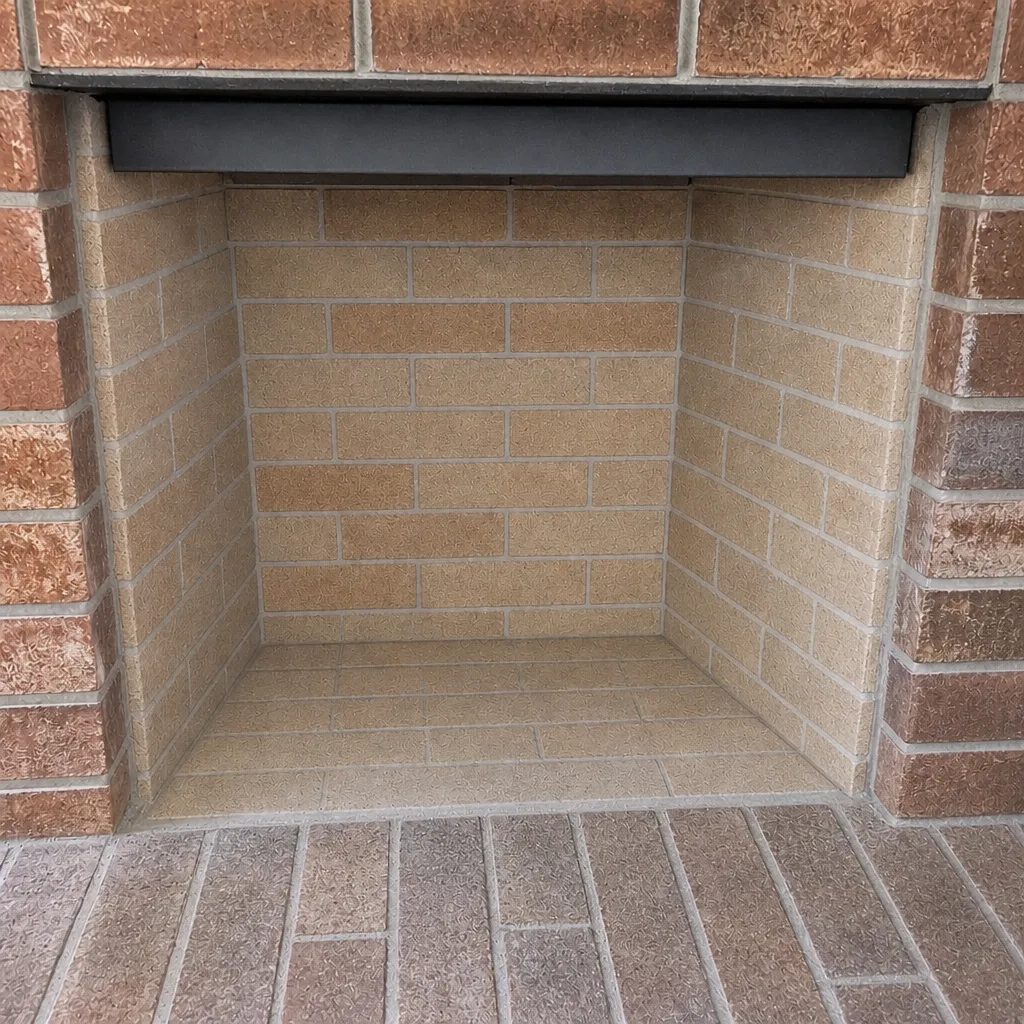
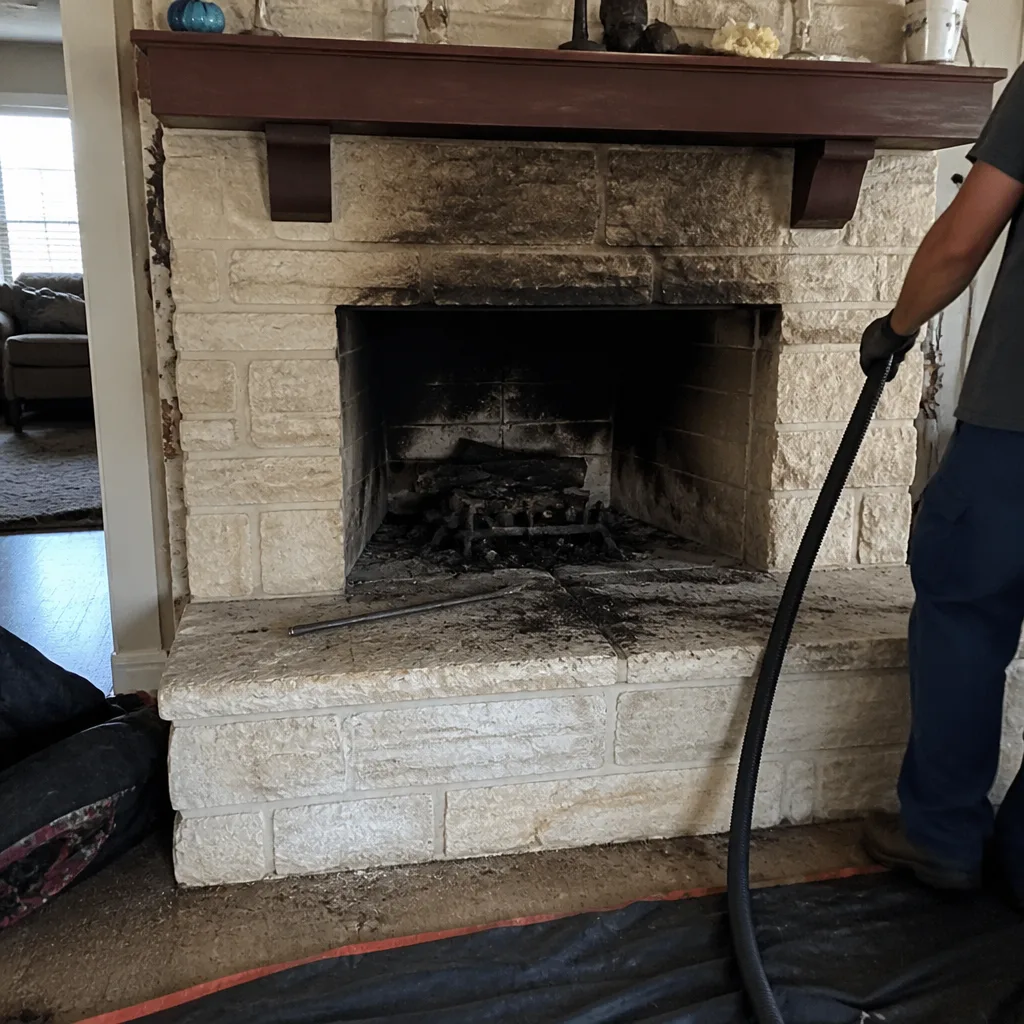
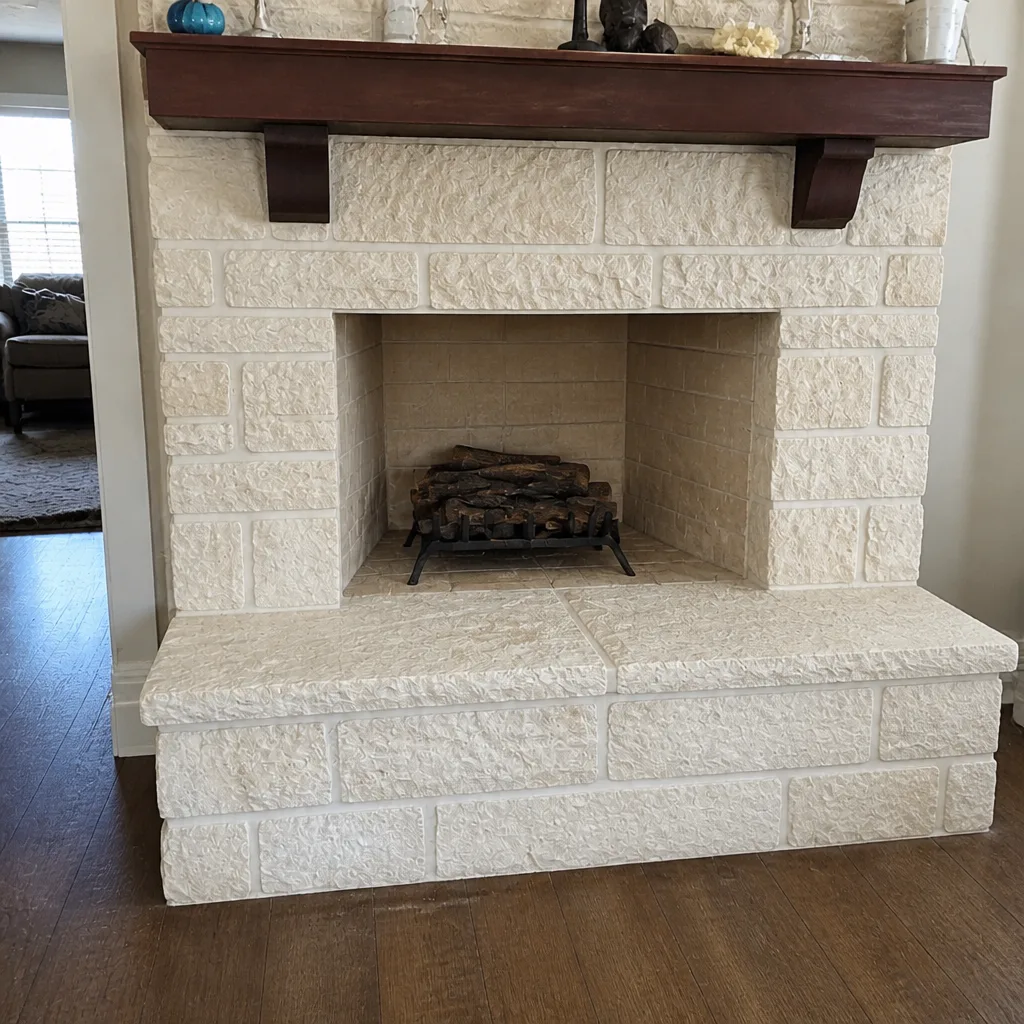
See the difference
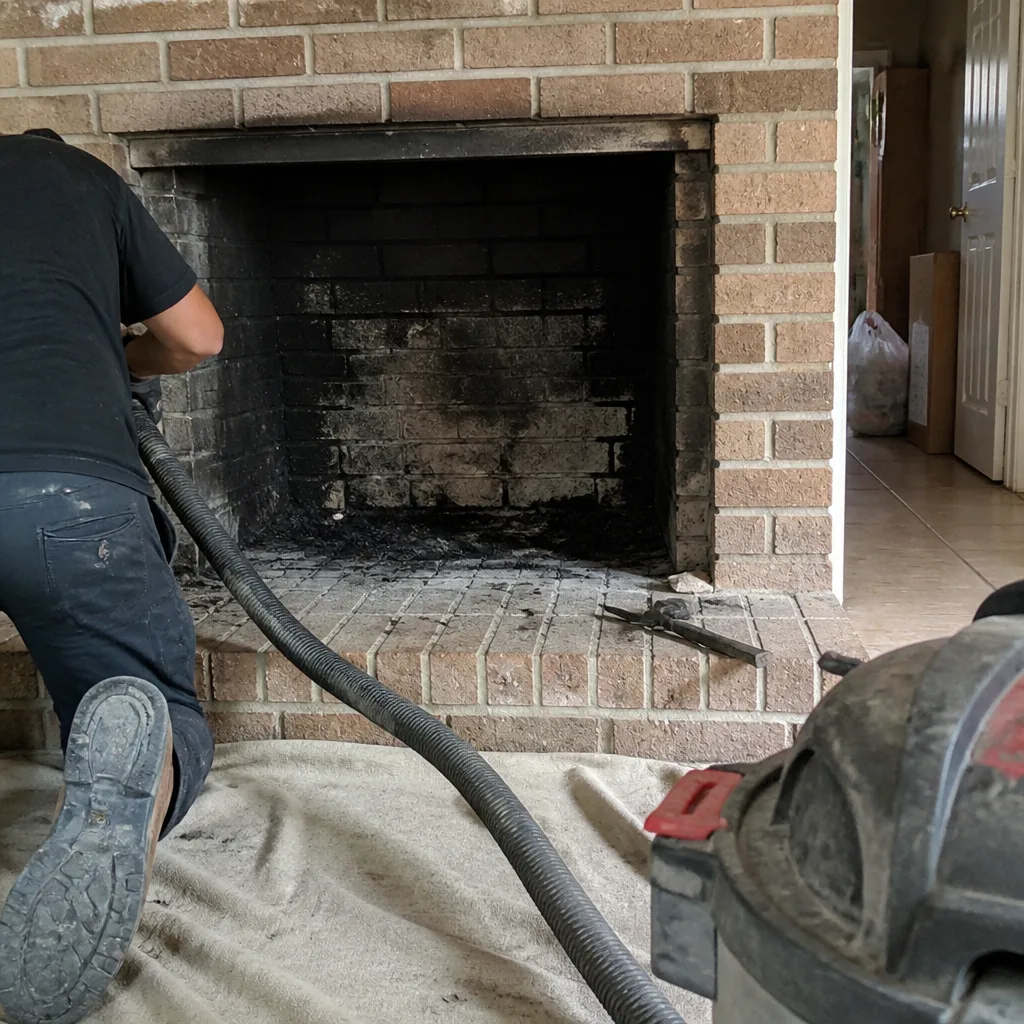 Before
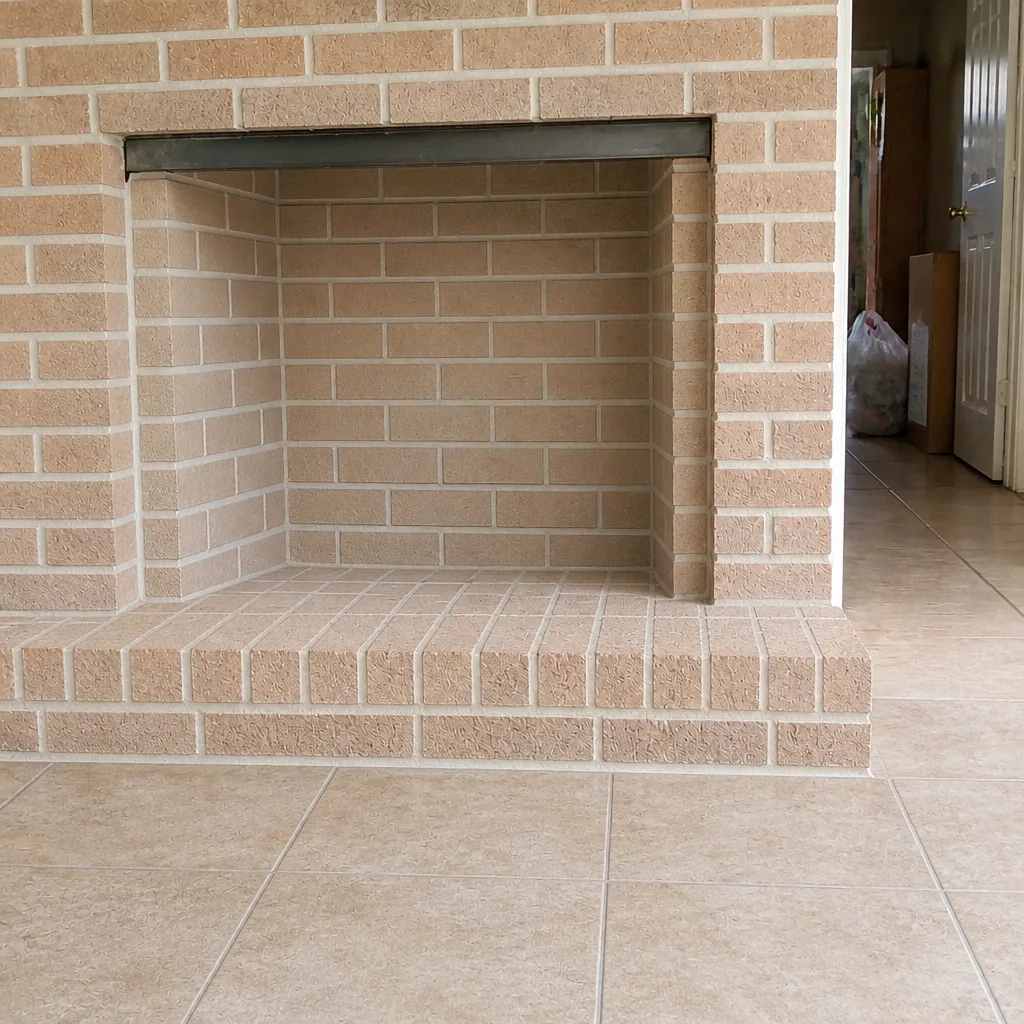 After
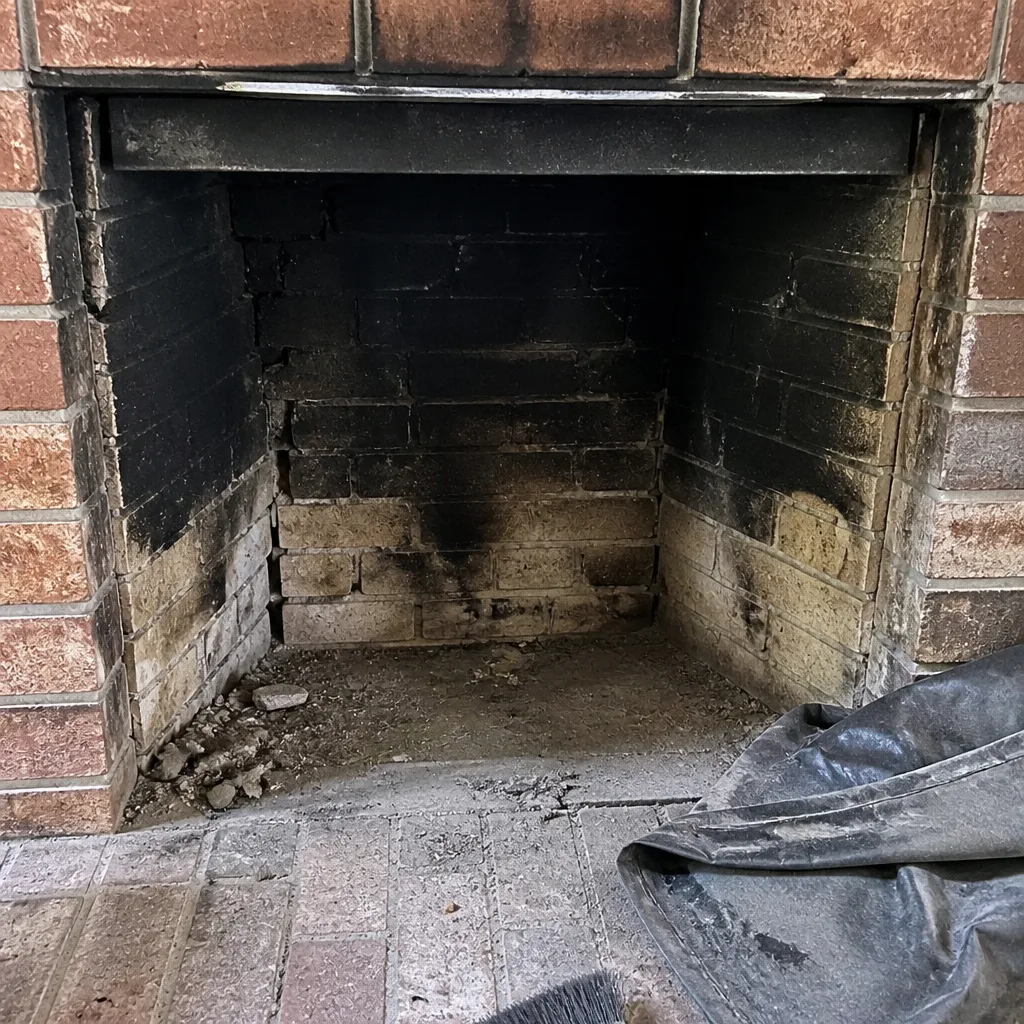 Before
 After
 Before
 After
When to Call a Professional
Call a professional when any of the conditions on our disqualifier list applies, when your flue is offset or angled, when the buildup looks hard or glazed rather than flaky, when there’s any visible liner damage, or when there’s a history of chimney fire. Call before your first fire of the season if you burn regularly, and call immediately if you notice smoke spilling into the room, a smoky smell when the fireplace is idle, or a draft problem you can’t explain. Chimney Sweep Beaumont offers free estimates in Beaumont – call (833) 946-8798. We answer 24/7, with fast dispatch from 7am to 7pm, Sunday through Friday. The written estimate sets the price, and it’s per job, not a fee.
We also offer inspection as a standalone service, which means you can have your Beaumont chimney assessed before committing to any repair work. The inspection tells you what’s actually there – not what justifies the next upsell. Our technicians have up to experience, and every sweep includes a camera inspection and photo report so you can see the evidence yourself. If the assessment shows that work can safely wait, we’ll say so.
Frequently Asked Questions
You can clean your own chimney only if the flue is straight and accessible, the buildup is light Stage 1 creosote, the liner is undamaged, and there’s no history of a chimney fire. In every other case, a professional sweep is the correct call, because a homeowner brush can’t verify the condition of the liner or remove Stage 2 and Stage 3 deposits. Call (833) 946-8798 for an exact quote – estimates are free.
Chimney Sweep Beaumont sets the price per job by the written estimate, and the estimate itself is free. Because the price depends on the flue’s condition, the creosote stage, and any repairs the inspection turns up, we give you a written figure after we assess the system rather than quoting a flat number over the phone. Call (833) 946-8798 for an exact quote.
An annual professional sweep and inspection is the standard for any household that burns regularly, and it’s the practice that keeps creosote from reaching a dangerous stage. Homes that burn frequently, or burn cool, smoldering fires, may need a sweep more often. Call (833) 946-8798 to book a sweep before burning season.
You need a new liner only when the inspection finds actual liner damage, and you shouldn’t accept a liner recommendation you can’t verify. Our process includes a camera inspection and photo report, so you see the evidence for yourself. If the flue is sound, we say so; if the liner can be restored rather than replaced, HeatShield resurfacing is the option we use. Call (833) 946-8798 for an inspection – estimates are free.
Skipping the sweep lets creosote progress from loose Stage 1 to hard Stage 2 and eventually to combustible Stage 3 glaze, and it leaves any liner damage undetected. Both raise the risk of a chimney fire and of carbon monoxide reaching the living space. Call (833) 946-8798 to book a sweep before the next burning season.
A self-cleaning leaves you without documentation of your flue’s condition, and that can complicate an insurance claim after a chimney fire. A dated professional inspection report gives you a record a homeowner brush kit can’t produce. Call (833) 946-8798 to have your Beaumont chimney inspected and documented.
The Bottom Line
The decision isn’t about how comfortable you are on a roof. It’s about whether a brush is the right tool for the creosote stage in your flue, whether your liner can be verified as sound, and whether you’ll have documentation if something goes wrong. A homeowner brush kit handles light Stage 1 creosote in a straight, accessible flue – and that’s the whole of its legitimate range. Everything beyond that range, from offset flues to glazed Stage 3 deposits to liner damage, needs professional rotary cleaning and a camera inspection. Handle the observation yourself: check the cap, test the damper, look at the exterior. Hand the flue to a professional.
Chimney Sweep Beaumont handles cleaning, repair, and inspection so you never need to coordinate multiple contractors for one system, and we use professional-grade products – HeatShield, DuraFlex, Gelco, Olympia Chimney, and more – because the right product for the job matters. If you’re weighing DIY against professional cleaning, call us for a straight assessment. Call (833) 946-8798 for a free estimate. We answer 24/7. Fast dispatch from 7am to 7pm, Sunday through Friday. Learn more about Chimney Sweep Beaumont and what a full assessment covers.
Written by the team at Chimney Sweep Beaumont.