
Last updated November 15, 2026
 Sweep & inspection
 Caps & crowns
 Flue relining
 Masonry repair
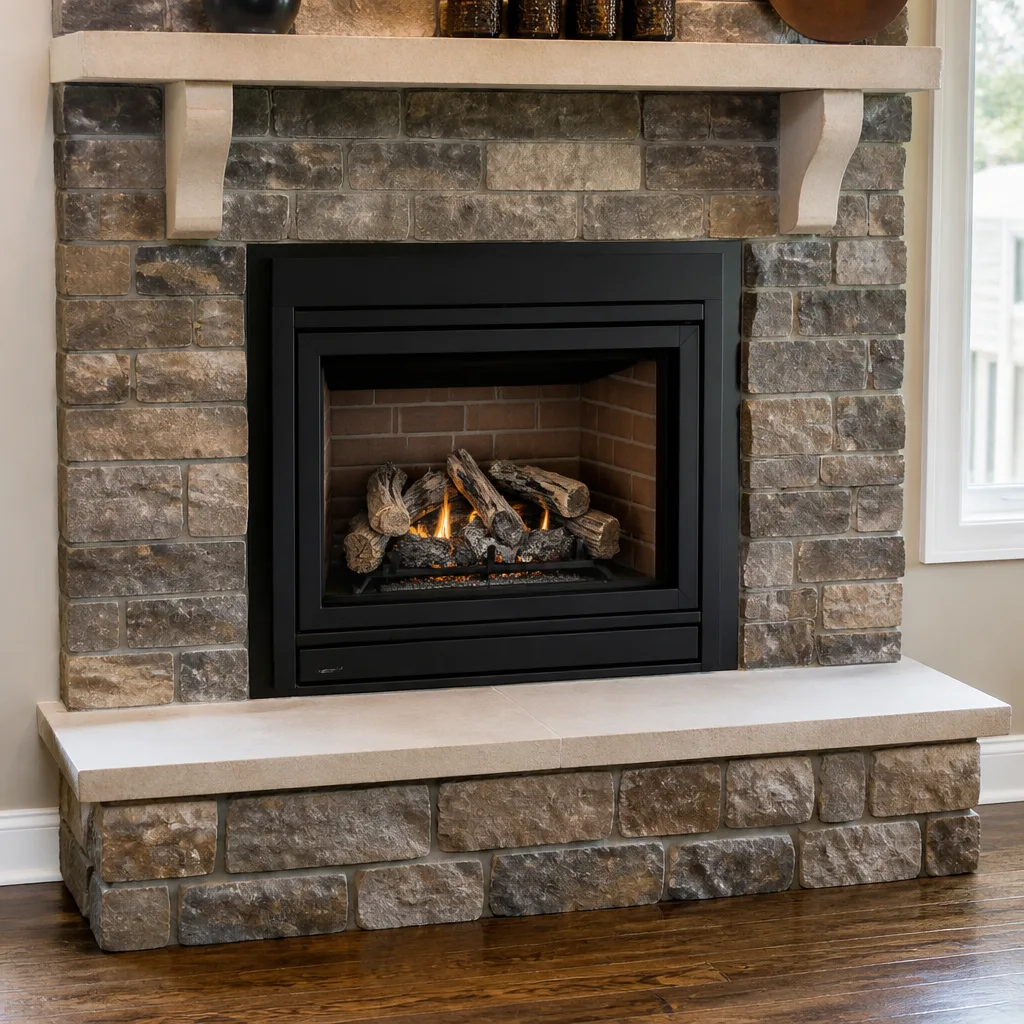 Gas fireplace service
Level 1 sweep and inspection to the NFPA 211 annual standard - flue, crown, cap, and flashing checked and photographed
Chimney sweep logs do not sweep chimneys. They loosen some creosote - which then falls where a brush and vacuum still have to collect it.
Chimney Cleaning Warning Signs: A Beaumont Homeowner’s Reference Guide
A white stain running down the side of your chimney is not a cosmetic issue you can paint over. It’s efflorescence, and it tells you water is moving through your masonry, dissolving mineral salts as it travels, and leaving them on the surface as it evaporates. The same moisture working on the outside of that brick is almost certainly working on the flue liner from the inside, where you can’t see it. Most chimney problems announce themselves long before they become dangerous, but only if you know what you’re looking at. This guide names each warning sign precisely, explains what’s causing it, and tells you whether it’s a schedule-it-when-convenient issue or a stop-using-the-fireplace-now issue. We’ll also cover what a Beaumont homeowner can reasonably check and what genuinely needs a camera inspection to diagnose.
Quick Answer
The warning signs that require professional attention in a Beaumont chimney include efflorescence staining, spalling brick, cracked mortar joints, a damaged crown, smoke rolling into the room, a damper that won’t seal, black streaking above the firebox, and any persistent acrid or musty odor from the fireplace. One sign means stop using the fireplace immediately: visible cracking or displacement of the flue liner at the firebox opening. Everything else should be inspected before your next fire, and some of it can wait for a routine sweep.
Styles & brands we work with
- Sweep & inspection
- Caps & crowns
- Flue relining
- Masonry repair
- Gas fireplace service
Table of Contents
- Exterior Warning Signs on Beaumont Chimneys
- Interior Warning Signs You Can See From the Living Room
- The Smell Test: What Odors From Your Fireplace Mean
- The One Warning Sign That Means Stop Using the Fireplace Now
- Cosmetic vs. Structural: How to Tell the Difference
- When a Camera Inspection Is the Only Way to Know
- A Seasonal Warning-Sign Checklist for Beaumont Homes
- Common Mistakes to Avoid
Exterior Warning Signs on Beaumont Chimneys
Stand across the street from your house and look at the chimney as a whole. The exterior is where Beaumont’s climate writes its record most plainly. Our long, humid summers push moisture into masonry, then months of heat bake it back out. That cycle, repeated over years, is what produces most of the visible warning signs below. None of them are emergencies by themselves, but each one tells you the chimney’s weather barrier has failed somewhere.
Efflorescence is the white, chalky staining we described at the top. It means water is dissolving salts out of the brick or mortar and depositing them on the surface. It’s a sign of active moisture movement, not just age. If you can brush it off and it comes back, water is still getting in.
Spalling brick looks like the face of the brick peeling or flaking away. Water has gotten behind the surface and pushed outward as it expands. Once brick spalls, that brick is permanently weakened and will need replacement, not repair.
Mortar joint erosion shows up as recessed, sandy, or crumbling joints between the bricks. The mortar is the softest part of the assembly and erodes first. Deeply recessed joints mean the chimney is losing structural cohesion and water is finding an easy path inward.
Crown cracking is the crack you’ll see at the concrete or mortar cap on top of the chimney. Summer heat expansion cycles open hairline cracks, and once they’re open, water runs straight down into the flue structure. A crown in good shape should shed water away from the flue, not funnel it in.
Look also at the chimney cap and the flashing where the chimney meets the roof. A missing or rusted cap, or lifting flashing, lets in the same moisture that produces everything above. A cap from a chimney-specific maker like Copperfield or Gelco is designed to keep water and animals out of the flue, which is a different job from a decorative cover.
Interior Warning Signs You Can See From the Living Room
You don’t need to climb on the roof to catch a chimney problem. Some of the clearest warning signs are visible from a chair beside the fireplace, and they point to issues an exterior inspection wouldn’t reveal.
Smoke rolling into the room instead of drawing up the flue is a draft failure. Common causes include a flue that’s partially blocked with soot or debris, a chimney that’s too short for the home’s geometry, or a negative pressure problem in the house. On a cool Beaumont evening with the AC running, negative pressure from exhaust fans can pull smoke back into the room even on a chimney that’s otherwise clear. If it happens once on a windy day, watch it. If it happens every time, that’s a chimney issue worth diagnosing.
A damper that won’t seal usually shows up as cold air drifting down the chimney when the fireplace is cold, or as a draft you can feel across the hearth. A damper that doesn’t close fully also lets in rain and animals, and it means you’re not getting real draft control when you burn. Damper problems are frequently a hinge or gasket issue, but they can also signal a warped or corroded frame that needs replacement.
Black streaking above the firebox opening is soot being deposited above the opening rather than carried up the flue. That pattern usually means smoke is escaping the firebox before it can establish draft. Sometimes it’s a fire built too large for the flue, sometimes it’s a partially obstructed flue, and sometimes it’s a firebox that’s overdue for a sweep. Either way, streaking that wasn’t there last season is telling you something changed.
Visible damage at the firebox opening is worth looking at directly. The firebox is where you can actually glimpse the base of the flue liner. Cracked or missing mortar in the firebox, or a liner that appears to have tiles out of alignment or a gap at the bottom, is information you can gather safely from outside the firebox without touching anything.
The Smell Test: What Odors From Your Fireplace Mean
A fireplace that smells wrong is telling you something specific, and different odors point to different causes. If you know the smell vocabulary, you can often narrow down the problem before anyone comes out.
- Musty, damp, or earthy smell: moisture intrusion. Water is getting into the chimney structure or flue, and the smell is the organic material that grows when masonry stays wet. Beaumont’s humidity makes this the most common odor complaint we hear. It usually pairs with efflorescence or spalling outside.
- Sharp, acrid, or smoky smell when there’s no fire: active creosote. Creosote is the residue of incomplete combustion, and in high concentrations it’s flammable. An acrid smell means there’s an accumulation in the flue that’s off-gassing. This is a schedule-a-sweep prompt, not a stop-using prompt, but it should be dealt with before the next fire.
- Burning plastic or chemical smell: something foreign is in the flue or firebox, or a component is overheating. Plastic smells can come from a melted damper gasket, an animal nest, or debris. That smell means stop burning and get the flue inspected, because you don’t know what’s in there.
- Strong smoky smell all season, even when the fire isn’t burning: draft problem or a flue that’s too dirty to draw properly. The flue is reeking into the room instead of venting out the top.
One more smell worth knowing: the faint sulfur or rotten-egg odor that might indicate a gas appliance venting into the chimney is a carbon monoxide concern and worth a call to a professional before you burn anything. Chimneys serving gas appliances need to be checked by someone trained on gas venting, not just a sweep.
The One Warning Sign That Means Stop Using the Fireplace Now
If you can see cracking, displacement, or missing sections of the flue liner at the firebox opening, stop using the fireplace today. Not tomorrow. Not “after this cold snap.” The flue liner is what separates combustion gases from the structure of your house. It carries smoke and carbon monoxide up and out. A breached liner lets those gases into spaces they should never reach, including the wood framing around the chimney and the air inside your home.
Here’s why this sign matters so much: the liner is designed to be sacrificial. It wears out first so the rest of the chimney doesn’t have to. Once it’s compromised, the masonry around it is exposed to the same heat and corrosive gases the liner was built to absorb. That damage accelerates quickly once it starts.
This is the one sign in this entire guide where we tell a homeowner to stop burning immediately. All the others are schedule-an-inspection signs. This one is a stop sign because carbon monoxide is invisible and odorless, and a breached liner can send it into your living space with no warning.
Once the fireplace is out of service, the right next step is a proper inspection with a camera to see the full length of the liner, not just the part visible at the firebox. From there, a decision gets made between resurfacing the existing liner and relining. We use HeatShield for liner resurfacing where the existing flue is sound enough to restore, and DuraFlex flexible liner systems when the flue needs a full reline, including older Beaumont homes with offset flues where a rigid liner won’t fit. Those are jobs for a chimney professional, not a DIY repair. The consequences of getting it wrong are not cosmetic.
Cosmetic vs. Structural: How to Tell the Difference
Not every visible blemish means the chimney is failing. The trick is understanding what each sign actually tells you about water, structure, and function. Here’s how the warning signs break down.
Likely cosmetic or minor maintenance: light efflorescence that hasn’t come back after cleaning, a small area of faded paint on the chimney exterior, a hairline crack in the crown that hasn’t widened, small chips in the brick face that don’t recur.
Structural or functional, but not emergency: efflorescence that keeps returning after cleaning, spalled brick in more than a few spots, consistent mortar joint erosion, a cracked or lifted crown, soot streaking above the firebox, a damper that won’t seal fully, smoke coming into the room on windy days.
Stop-and-inspect: visible liner damage at the firebox opening, a liner with displaced tiles, missing mortar in the firebox, smoke rolling into the room on every fire, a burning plastic or chemical smell.
Here’s the practical dividing line: if a sign involves water actively moving through the structure, it’s structural even if it looks mild. Moisture that reaches the flue liner from the outside does the same thing to a liner that condensation does from the inside, and the damage accumulates out of sight. And if a sign involves smoke not going where it’s supposed to, it’s a functional problem regardless of how the chimney looks. A chimney can look fine from the street and still have a broken liner. This is where a chimney inspection that tells you what’s actually there, rather than what justifies a repair, is the tool that matters.
If you’re seeing any of the structural signs on your Beaumont home, it’s worth scheduling a chimney repair assessment before the burning season starts, when the issue is easier to address and the appointment calendar isn’t full.
When a Camera Inspection Is the Only Way to Know
Surface assessment can tell you a lot, but it can’t see around a flue offset, past the smoke shelf, or into the top of a liner. For several of the warning signs in this guide, a camera inspection isn’t an upsell, it’s the only way to actually diagnose the problem.
A camera inspection becomes necessary when:
- The liner is suspect. Cracking at the firebox opening often continues out of sight. The camera runs the full flue and shows whether the damage is localized or extends up the run.
- Symptoms don’t match what’s visible. If smoke rolls into the room but the firebox and the visible flue look fine, the blockage or offset problem is likely somewhere the camera needs to go.
- You’re buying a home with an unverified chimney. Every older Beaumont house has a chimney history, and most of it isn’t documented. A camera inspection tells you what’s actually there before you make a purchase decision.
- You’re deciding between repair and relining. HeatShield resurfacing only works if the existing liner is structurally sound enough to carry it. The camera is what tells the technician whether resurfacing is the right call or whether the flue needs a full reline with a product engineered for it.
- The smell test and the visual test disagree. If you smell creosote but no soot is visible, or if you see efflorescence but the crown looks intact, there’s a hidden path the camera will find.
We offer chimney inspections as a standalone service so the assessment is never tied to pressure to book the repair. The point of the inspection is to report what the camera shows, not to build a case for a job. That matters when you’re weighing a resurfacing against a full reline, and it matters when the honest answer is that the issue can wait a season.
A Seasonal Warning-Sign Checklist for Beaumont Homes
Beaumont’s burning season runs in the cooler months, which means late summer through early fall is the practical window for a warning-sign walkthrough. Run this checklist before your first fire of the season.
- Walk the exterior. Look for white staining, flaking brick, recessed mortar joints, crown cracks, and a cap that’s missing, rusted, or loose.
- Check the firebox opening. Look for cracked mortar, displaced liner tiles, or any gap where the liner should be continuous. Stop here if you see damage.
- Smell the fireplace when it’s cold. Note whether it smells musty, acrid, or neutral. Musty points to moisture, acrid points to creosote.
- Test the damper by hand. Open and close it fully. It should seat snugly and move without catching or grinding.
- Look above the firebox. Fresh black streaking means smoke was escaping the firebox in previous burns.
- Watch your first small fire. If smoke rolls into the room on a small, well-built fire, that’s a draft problem worth diagnosing before the next burn.
- Schedule a sweep and inspection. If you see any structural signs, if you haven’t had the chimney cleaned in the past year or two, or if you’re in a new-to-you Beaumont home and don’t know the chimney’s history, book a sweep.
This is a walkthrough, not a repair. Everything above is done from the ground or the hearth without tools. Nothing here replaces having a trained technician look inside the flue.
For the full picture of what a regular sweep and inspection cover, the chimney sweep service page walks through the process step by step. And if you’re newer to the city, our Beaumont service area page covers what’s local to our work here.
Common Mistakes to Avoid
- Painting over efflorescence. Paint traps the moisture inside the masonry and makes the underlying problem worse. Efflorescence has to be addressed at its source, not covered.
- Assuming a chimney that looks fine from the street is safe. A chimney can have a cracked liner, a blocked flue, or heavy creosote buildup with no visible exterior signs at all. The visible signs are the ones you can catch; the invisible ones are the reason for a camera inspection.
- Burning wet or unseasoned wood to save money. Wet wood produces more creosote than dry wood, and creosote buildup is what makes chimney fires possible. In Beaumont’s humidity, firewood needs to be stored covered and off the ground, and it needs to be genuinely dry before it burns clean.
- Skipping the sweep because “we only burned a few fires this season.” Creosote accumulates per volume of wood burned, not per season of fireplace use. A few long, hot burns can produce more buildup than many small ones.
- Treating a smoke-into-the-room problem as a house-pressure quirk. Sometimes it is. But if it happens consistently, it’s a draft problem and should be diagnosed rather than worked around by cracking a window.
- Having a general handyman reline a chimney. Liner systems are engineered specific to chimney systems. A reline with a generic material can fail at the joints or at the top termination, and the failure isn’t always visible. The right product matters, and that’s why we work with DuraFlex, HeatShield, Olympia Chimney, and other brands built specifically for chimney work.
- Letting a capped or unused chimney go unexamined. An unused chimney still collects moisture, animals, and debris, and its flue liner still deteriorates. An unused Beaumont chimney should get looked at before it’s returned to service.
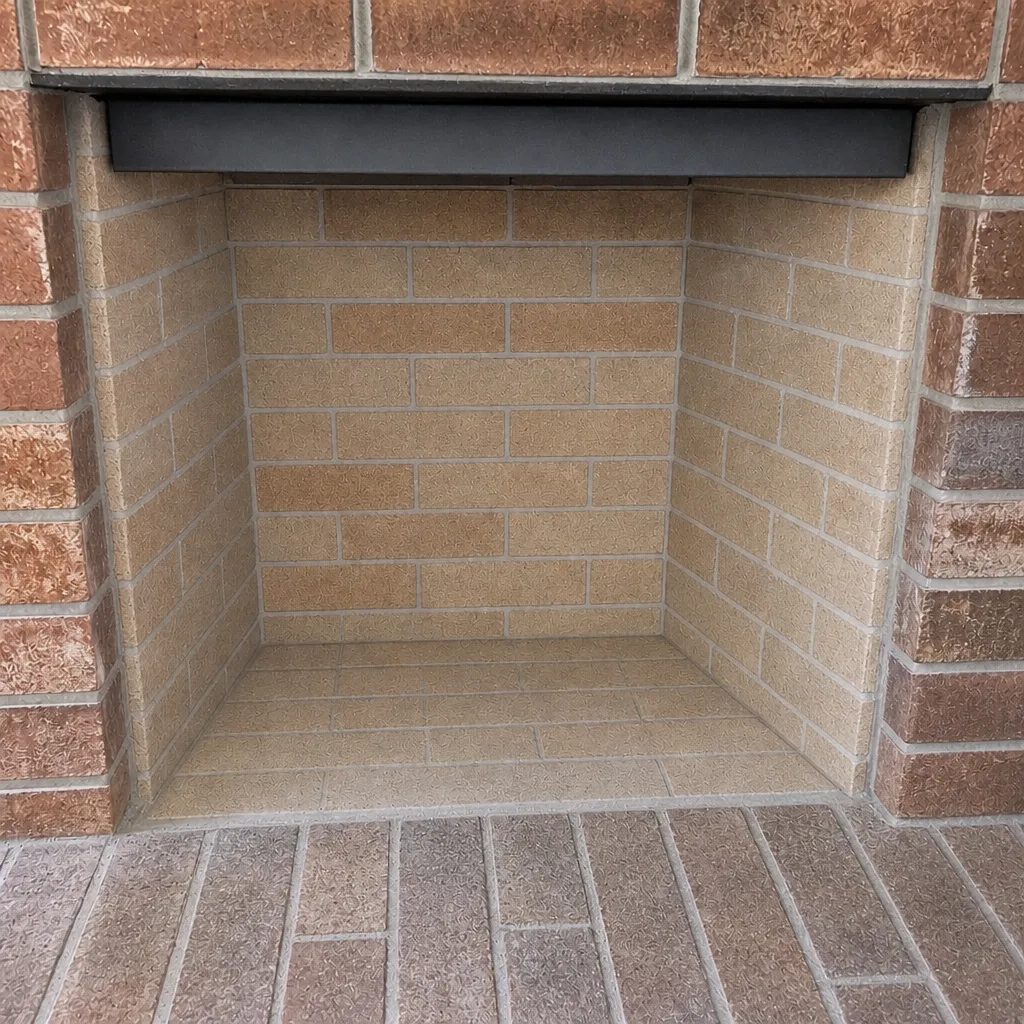
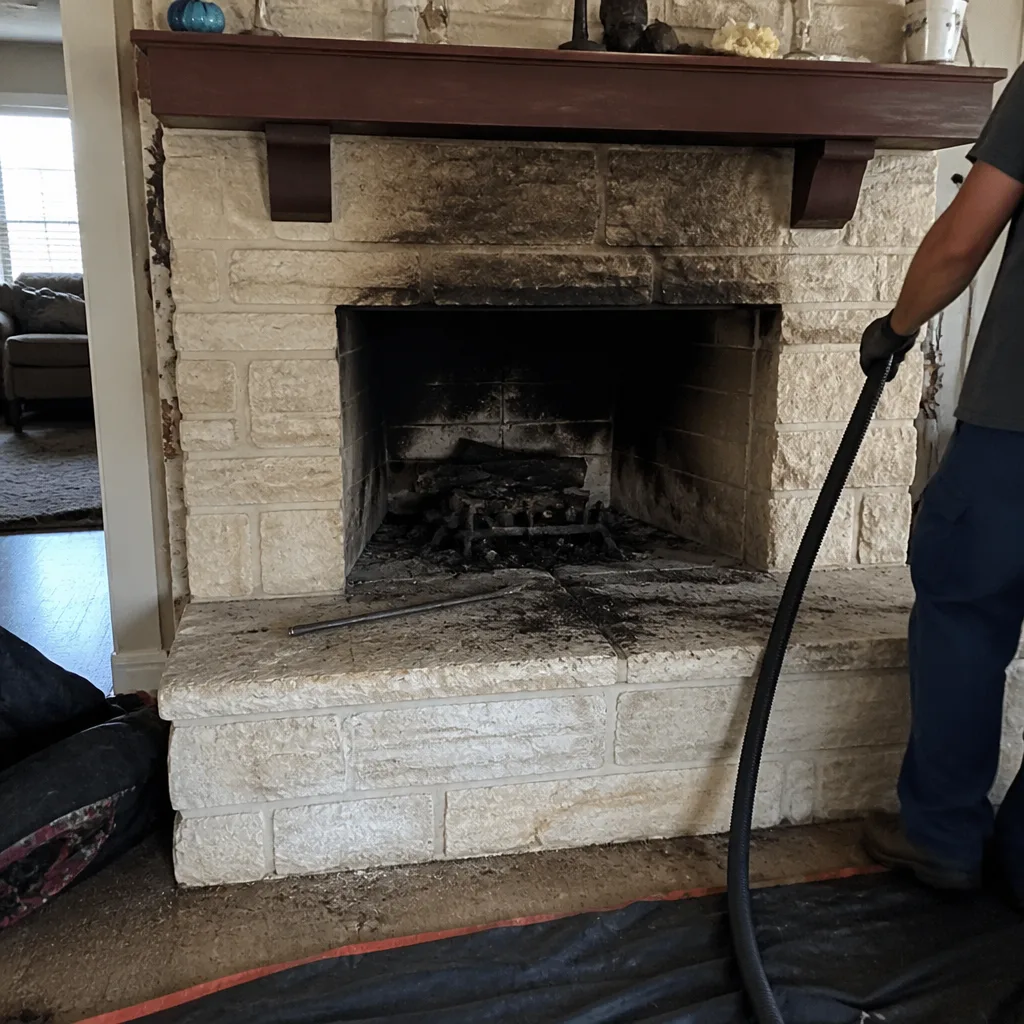
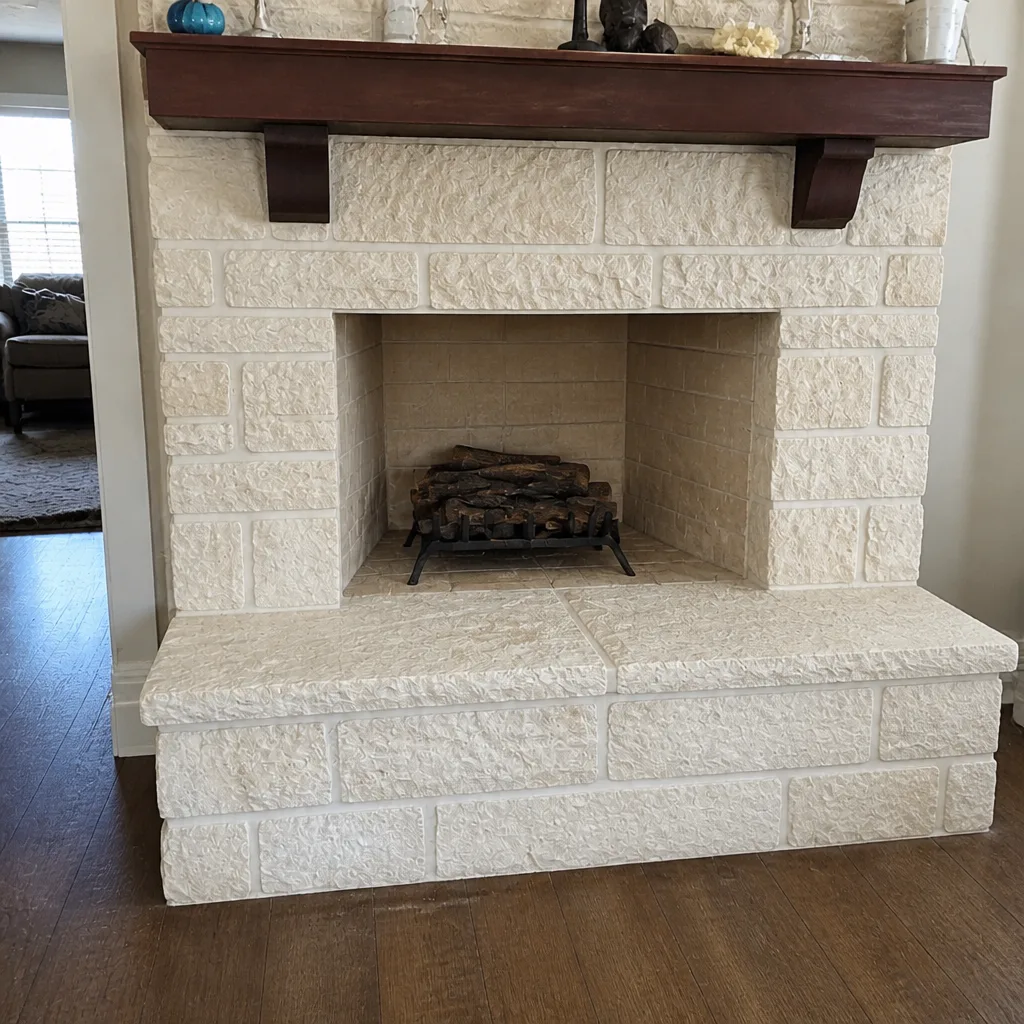
See the difference
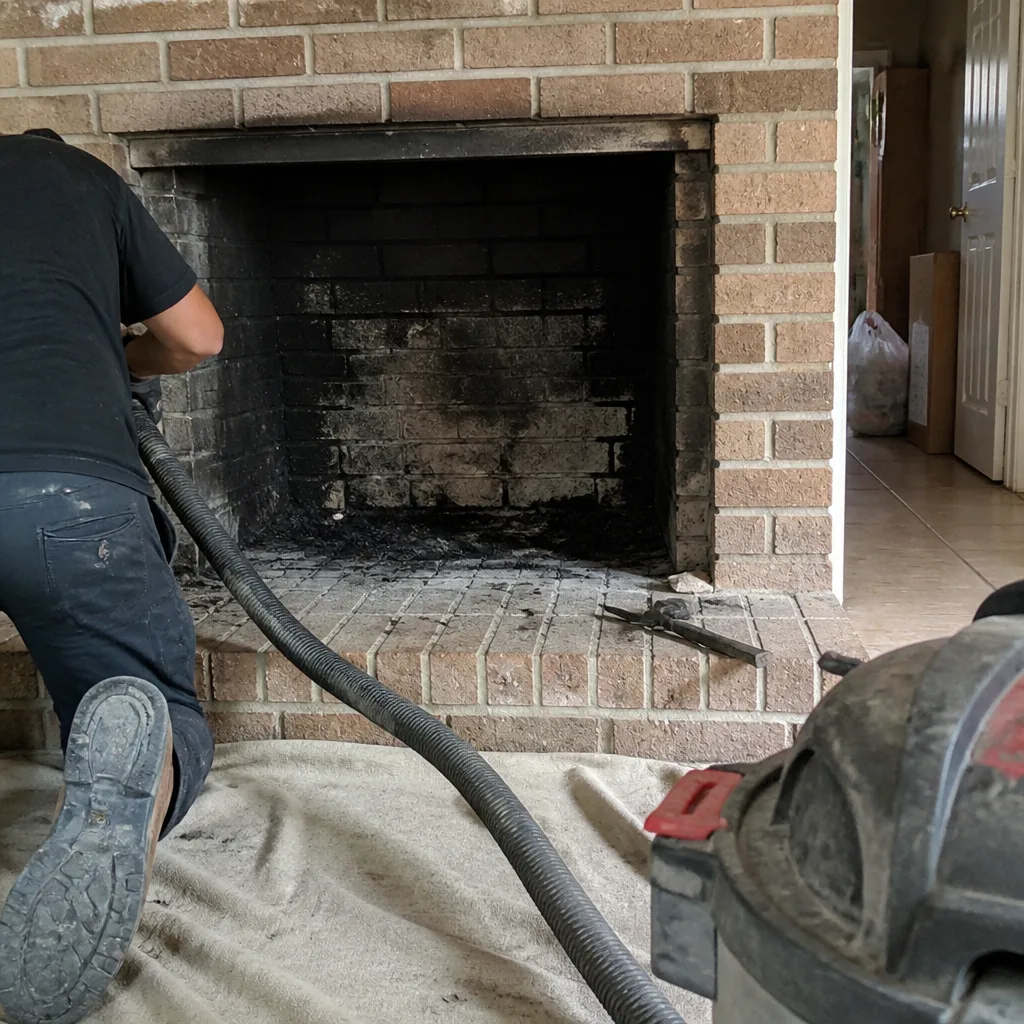 Before
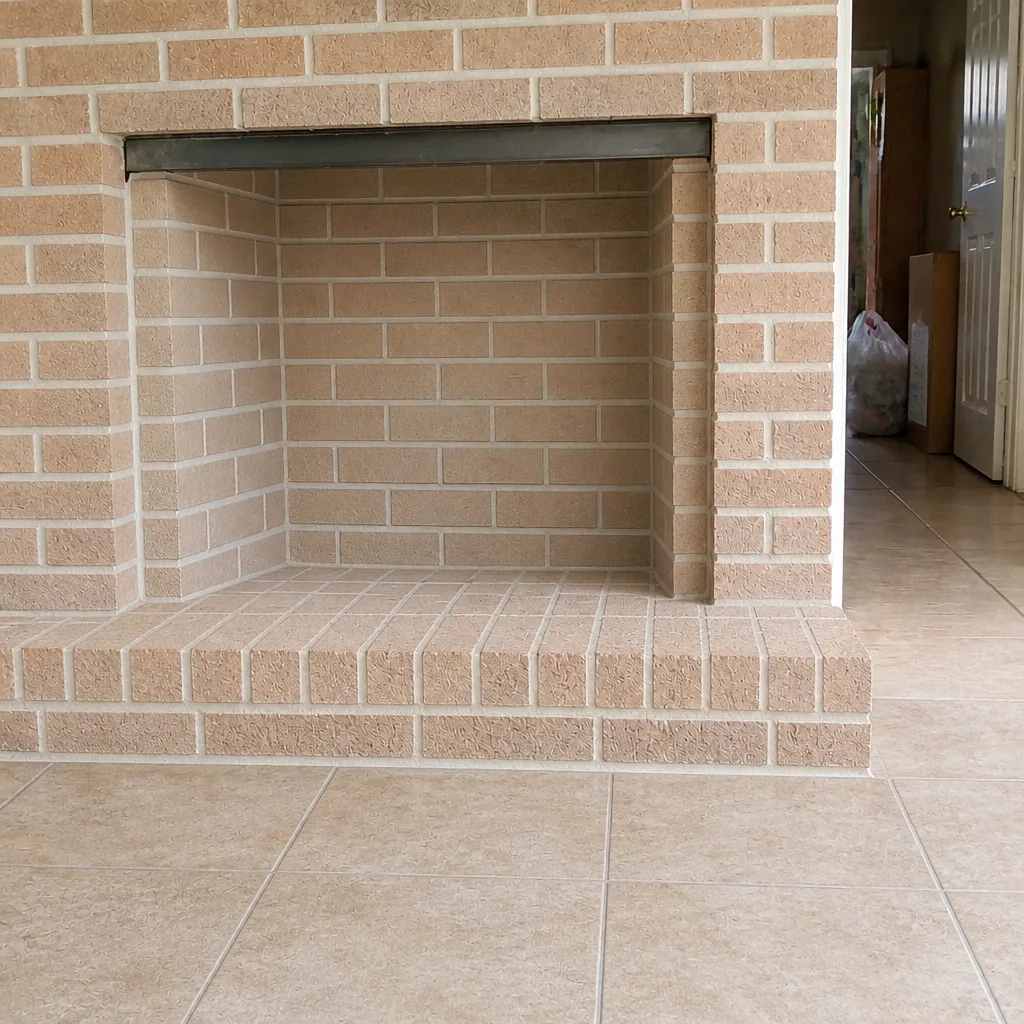 After
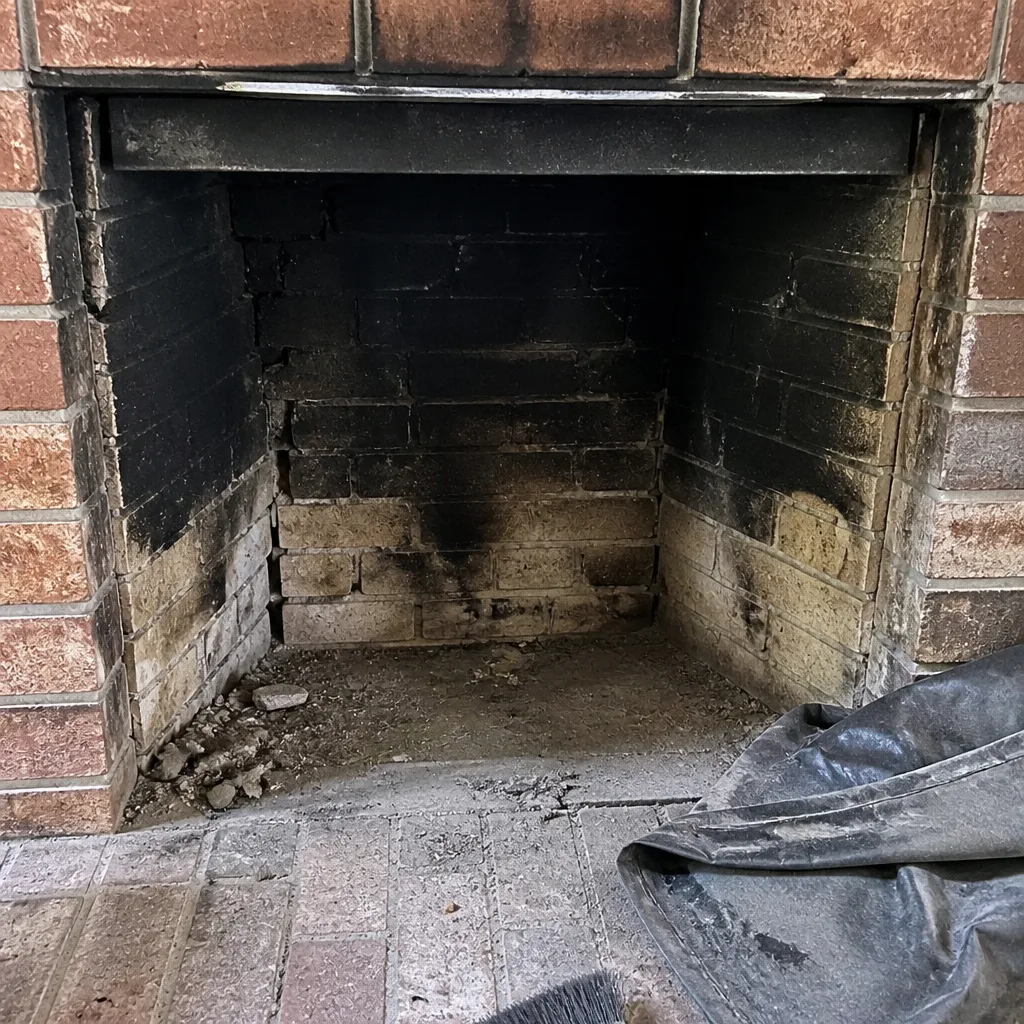 Before
 After
 Before
 After
When to Call a Professional
You should call a chimney professional if you see spalling brick, recurring efflorescence, cracked or recessed mortar joints, a damaged crown, or anything amiss at the firebox opening. You should call sooner if smoke rolls into the room on a regular fire, if you smell acrid creosote between burns, or if you see visible liner damage. And you should call immediately, before using the fireplace again, if the liner at the firebox opening is cracked or displaced. Those are the signs where the next fire is a risk, not a convenience issue.
Chimney Sweep Beaumont offers free estimates in Beaumont. We handle sweeping, repair, and inspection so you’re not coordinating multiple contractors for one chimney system. Call (833) 946-8798.
Frequently Asked Questions
Efflorescence staining, spalling brick, mortar joint erosion, and crown cracking are the most common exterior signs on Beaumont chimneys, driven by our long humid summers and heat expansion cycles. Inside, the most common signs are black streaking above the firebox, smoke rolling into the room, and a damper that won’t seal. Acrid or musty odors from the fireplace are also common and point to creosote buildup or moisture intrusion. Call (833) 946-8798 for a free estimate if you’re seeing any of these – estimates are free.
A chimney sweep is priced per job, and your written estimate sets the final price. It’s based on the chimney’s configuration, the level of creosote buildup, and whether an inspection is included. We don’t give a per-hour or per-visit number before seeing the chimney, because the range across Beaumont homes is real. Call (833) 946-8798 for an exact quote – estimates are free.
White staining is efflorescence, and it means water is moving through your masonry, dissolving mineral salts, and depositing them on the surface as it evaporates. The same moisture reaching the exterior is likely working on the flue liner from the inside. It’s a sign to schedule an inspection, not a stop-use emergency unless you also see liner damage. Call (833) 946-8798 to book an inspection.
Sometimes yes, and sometimes no. A liner that’s locally damaged but structurally sound can often be restored with HeatShield resurfacing, which rebuilds the flue’s inner surface without a full replacement. A liner that’s deteriorated through its full run, or a flue configured with offsets that a rigid liner can’t navigate, typically needs a full reline with a flexible system like DuraFlex. The camera inspection is what decides between the two. You see the evidence, and the recommendation follows from what’s there. Call (833) 946-8798 for an exact quote – estimates are free.
Most chimneys used regularly should be swept once a year, and a camera inspection once every few years even if nothing is obviously wrong. A chimney used heavily or burning a lot of sappy or unseasoned wood may need it more often. In Beaumont, where fireplaces often get used in bursts during cooler spells, the volume of creosote matters more than the calendar: an annual sweep with an inspection is the baseline. Call (833) 946-8798 to get on the schedule.
Creosote accumulates in the flue with every fire, and if it isn’t removed, it eventually ignites. A chimney fire can crack the liner, damage the masonry, and set the surrounding framing on fire, and you may not know it happened until the next inspection. Skipping the sweep also increases the chance of carbon monoxide entering the home through a compromised flue, and it lets water intrusion and structural damage progress unaddressed. There’s no single warning that happens on a schedule. The problem builds quietly. Call (833) 946-8798 for a free estimate on a sweep – estimates are free.
The Bottom Line
Most chimney problems in Beaumont are visible or smellable before they become urgent. The exterior tells you about water moving through masonry; the interior tells you about draft, soot, and liner condition; the smell test tells you which of those is active. Cosmetic signs can wait for a routine sweep. Structural and functional signs should be diagnosed before the next fire. And any visible liner damage at the firebox opening stops the fireplace now, not later. When the diagnosis needs to go past what you can see, a camera inspection is the tool that makes it honest. Our technicians have up to experience, and Chimney Sweep Beaumont works with professional-grade materials from brands chimney specialists trust – DuraFlex, HeatShield, Copperfield, Olympia Chimney, and more. Clean, repair, inspect: every part of your chimney system handled by one team. Call (833) 946-8798 for a free estimate. We answer 24/7. Fast dispatch from 7am to 7pm, Sunday through Friday.
Written by the team at Chimney Sweep Beaumont.